At The Dental Loft at Perry Hall, we view dental implants as more than a prosthetic solution — they are a way to restore function, comfort, and confidence. Missing teeth change how you chew, speak, and how your face is supported; implants address those issues by replacing both the visible tooth and the root structure underneath. For many patients, this approach delivers a long-term, natural-feeling result that integrates with daily life rather than limiting it.

Implants are small, biocompatible posts placed into the jawbone to serve as stable anchors for crowns, bridges, or appliance retention. Because they fuse with bone through a process called osseointegration, they recreate the support that a natural tooth root provides. That stability means improved chewing efficiency, clearer speech, and a more secure foundation for dental restorations.
We tailor each implant treatment to the individual. Your overall health, oral condition, and personal goals guide our recommendations. In every case, our priority is to create an outcome that looks natural, feels comfortable, and supports long-term oral health.
Dental implants are prized for how closely they mimic natural teeth in both appearance and function. Unlike removable options, implants are fixed in place and resist the movement and wear that can accompany dentures. That translates into fewer dietary restrictions and greater confidence when eating, speaking, or smiling in public.
Another key advantage is preservation of the jawbone. When a tooth is lost, the underlying bone can resorb over time. An implant stimulates the bone where a missing root once did, helping to maintain facial contours and structural integrity. For many patients, this means preserving a more youthful profile and avoiding future changes to bite and alignment.
With good oral hygiene and routine professional care, implants are designed for durability. While no medical treatment is entirely without risk, implants have a strong track record for long-term success when placed and maintained properly.
When only one tooth is missing, a single dental implant topped with a ceramic crown can replace that tooth without altering neighboring teeth. This preserves the health and structure of adjacent teeth while restoring a single gap with a discreet, natural-looking result. Single-tooth implants are often indistinguishable from the surrounding dentition in both form and function.
For spaces where multiple teeth are missing, implant-supported bridges use strategically placed implants to hold a series of crowns. This approach avoids the need to prepare adjacent healthy teeth for traditional bridgework, reducing unnecessary alteration of natural tooth structure while providing a strong, bone-preserving solution.
Full-arch implant restorations recreate a complete set of teeth using a limited number of implants — commonly four to six per arch — to support a fixed prosthesis. This option can transform the experience for patients who previously relied on conventional dentures, offering improved chewing performance, greater comfort, and a permanently affixed arch that does not require daily removal.
Implant-retained dentures attach to implants for enhanced stability while remaining removable for cleaning if desired. These overdentures significantly reduce slippage and increase bite efficiency compared with traditional dentures and are an excellent choice for patients seeking improved retention without a fully fixed solution.
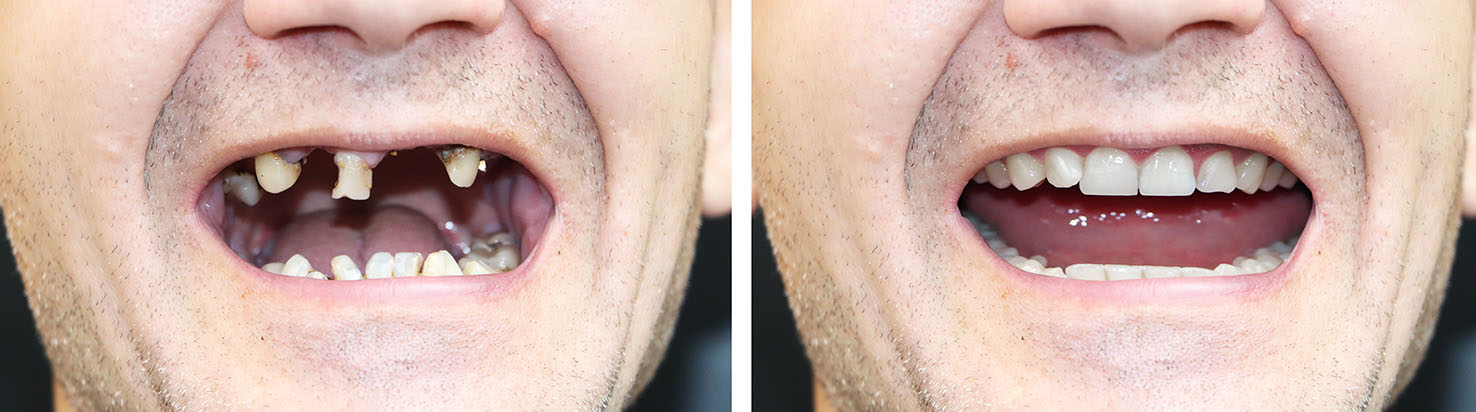
Successful implant care begins with a thorough evaluation that considers medical history, oral health, bone volume, and cosmetic goals. We use clinical exams, imaging, and careful planning to determine the number and placement of implants best suited for each case. Clear communication about the steps involved helps patients approach treatment confidently.
Surgical placement of implants is typically performed as an outpatient procedure using local anesthesia and, when appropriate, sedation options to ensure patient comfort. The exact duration and complexity of surgery depend on factors such as the number of implants and whether preparatory procedures — like extractions or bone grafting — are necessary.
After placement, implants require time to integrate with the jawbone. This healing period varies by case and can range from a few weeks to several months. During osseointegration, temporary restorations can often be provided so patients maintain a functional and aesthetic smile while the implant bonds with bone.
Some patients require additional bone support before or during implant placement. Bone grafting rebuilds lost volume and provides the foundation needed for a stable implant. Grafting techniques are predictable and widely used to restore bone that has diminished due to tooth loss, periodontal disease, or trauma.
Grafts can be placed at the time of extraction or as a separate preparatory procedure. The goal is the same: create a reliable environment for implants so they can deliver consistent function and longevity. Our planning process evaluates bone quality and volume early to determine whether grafting is necessary and to incorporate it smoothly into the overall treatment timeline.
Maintaining dental implants requires the same attention as natural teeth: daily cleaning and regular professional check-ups. Routine exams let us monitor the health of peri-implant tissues, evaluate the stability of restorations, and address any concerns promptly. With proper care, implants can serve patients for many years and often for a lifetime.
We will provide personalized oral hygiene guidance and schedule follow-up visits to ensure your implant-supported restoration continues to perform well. Early detection of problems and timely intervention are important components of long-term success.
Missing teeth affect more than appearance; they influence nutrition, speech, and how comfortable you feel in everyday life. Modern implant dentistry offers predictable, durable options that restore these functions while preserving oral health. Our team designs treatments that fit each patient’s needs and goals, balancing form, function, and longevity.
If you would like to learn whether implant dentistry is the right solution for your smile, our team at The Dental Loft at Perry Hall is available to discuss your situation and outline the next steps. We welcome the opportunity to answer your questions and help you explore treatment options tailored to your needs.
Contact us to request more information or to schedule a consultation — we’ll be happy to walk you through the process and help you decide on the best path forward for restoring your smile.
Dental implants are small, biocompatible posts placed into the jawbone to replace missing tooth roots and support crowns, bridges, or dentures. Unlike removable dentures or traditional bridges, implants recreate the root structure and integrate with bone through a process called osseointegration. This foundation restores chewing function and helps preserve the surrounding jawbone.
Because implants support restorations directly, they often feel and function more like natural teeth than alternative prosthetics. They reduce the need to alter adjacent healthy teeth and help maintain facial structure over time. Successful implant treatment depends on careful planning and proper maintenance to support long-term outcomes.
An implant restoration typically consists of three parts: the implant (the metal post placed in bone), an abutment that connects the post to the visible restoration, and the crown, bridge, or denture that replaces the tooth. After placement, the implant fuses with the jawbone through osseointegration, creating a stable anchor for the prosthetic. This biologic integration is what allows implants to withstand normal chewing forces.
Imaging and digital planning guide the position and size of each implant to achieve optimal function and aesthetics. Temporary restorations can be used during healing so patients maintain function and appearance. Once integration is complete, the final restoration is attached and adjusted for comfort and bite alignment.
Good candidates usually have generally healthy gums, adequate jawbone volume, and the ability to maintain regular oral hygiene. Certain medical conditions, medications, or habits like heavy smoking can affect healing and implant success, so a thorough medical and dental evaluation is necessary. Advanced imaging and clinical exams help determine whether additional procedures such as extractions or grafting are required before implant placement.
Age alone is not a disqualifying factor; treatment is based on oral and overall health rather than a patient’s chronological age. If bone volume is insufficient, predictable grafting techniques can often create a suitable foundation for implants. Your treatment plan will be individualized to address any health considerations and optimize long-term success.
Common implant restorations include single crowns for one missing tooth, implant-supported bridges for several adjacent missing teeth, full-arch fixed restorations that replace an entire upper or lower arch, and implant-retained overdentures that snap onto implants for improved stability. The right option depends on how many teeth are missing, bone availability, functional needs, and cosmetic goals. Your dentist will explain the pros and cons of each approach and recommend a solution tailored to your situation.
Single crowns preserve neighboring teeth and are ideal when only one tooth is missing, while implant-supported bridges avoid altering healthy adjacent teeth when replacing multiple teeth. Full-arch solutions can transform function for patients who previously relied on conventional dentures, and overdentures offer a removable option with much greater retention. Treatment planning balances durability, function, and the level of maintenance you prefer.
Treatment begins with a comprehensive evaluation that includes medical history, clinical examination, and imaging such as CBCT scans when indicated to assess bone volume and vital anatomy. This diagnostic phase guides the number, size, and position of implants and identifies whether preparatory procedures like extractions or bone grafting are needed. Clear communication about each step helps patients understand the timeline and expected milestones.
Surgical placement of implants is typically done as an outpatient procedure using local anesthesia and, if appropriate, sedation to ensure patient comfort. After placement there is a healing period while osseointegration occurs; temporary restorations can often be provided so patients maintain function. Once integration is confirmed, the final abutments and restorations are placed and adjustments are made to achieve proper bite and appearance.
Bone grafting is recommended when there is insufficient jawbone to support an implant due to long-standing tooth loss, periodontal disease, or trauma. Grafting rebuilds lost volume and provides a stable foundation for implant placement, and it can be performed at the time of extraction, before implant placement, or simultaneously with implants depending on the case. The choice of graft material and technique is based on the amount of bone needed and the patient’s clinical situation.
After grafting, a healing period is required to allow the graft to integrate and become vascularized, which can take several months in many cases. With proper care and follow-up appointments, grafting procedures are predictable and increase the chances of successful implant placement. Your dentist will explain the timeline, healing expectations, and any measures to support a smooth recovery.
Initial recovery typically involves some swelling, mild discomfort, and sensitivity at the surgical sites, which can be managed with prescribed or over-the-counter medications and cold packs as recommended. Eating soft foods and avoiding strenuous activity for the first few days helps support healing, and following post-operative instructions lowers the risk of complications. Gentle oral hygiene is important from the start; your provider will outline safe ways to clean around the surgical sites while tissues heal.
Follow-up visits are scheduled to monitor healing and to determine when the implant has integrated sufficiently to support a restoration. If temporary restorations are in place, they may be adjusted during this phase to protect the implant and surrounding tissues. Maintaining routine dental checkups and professional cleanings after the final restoration is placed supports long-term health and function.
With proper placement and ongoing care, dental implants can last for many years and often for the remainder of a patient’s life, but longevity depends on oral hygiene, health status, and regular professional care. Daily brushing and flossing around implant restorations along with routine dental exams are essential to prevent plaque accumulation and peri-implant inflammation. Your dentist will recommend a personalized maintenance schedule that may include more frequent cleanings and periodic radiographs to monitor bone levels.
Early detection of soft tissue changes or bone loss around implants allows timely intervention and helps protect the restoration. Avoiding tobacco and managing systemic conditions such as diabetes also supports implant longevity. Staying proactive with follow-up care is one of the most reliable ways to preserve implant health over time.
Like any surgical procedure, implant placement carries risks such as infection, bleeding, or swelling, and there is a possibility of nerve or sinus involvement depending on the implant site. Peri-implantitis, an infection affecting the tissues around the implant, can develop if oral hygiene is inadequate or if risk factors are present, and it may require professional treatment to control. Careful planning, precise surgical technique, and close follow-up reduce the likelihood of most complications.
If complications occur, they are typically managed with targeted interventions such as antibiotics, local debridement, revision surgery, or grafting when necessary. Early recognition of symptoms such as persistent pain, mobility of the restoration, or unusual swelling is important, so patients should report concerns promptly. Your dental team will discuss potential risks during the consultation and explain the strategies used to minimize them.
To schedule a consultation at The Dental Loft at Perry Hall, call (410) 538-2262 or request an appointment online; the team will gather basic medical and dental history to begin the evaluation. For the visit, bring a list of current medications, relevant medical records, and any recent dental imaging you may have, as these items help streamline planning and reduce the need for repeat tests. Providing information about previous dental work and your goals for treatment enables a more productive consultation.
During the consultation you can expect a clinical exam, a review of your medical history, and any necessary imaging to assess bone and tissue conditions. The dentist will explain recommended options, outline the diagnostic findings, and describe the next steps so you understand the proposed sequence of care. Clear communication about expectations and questions is encouraged to ensure the plan aligns with your functional and aesthetic goals.
Our practice helps every patient achieve a healthy, confident smile with personalized, compassionate care in a comfortable, modern environment.